


Connecting SecOps to value (and data)
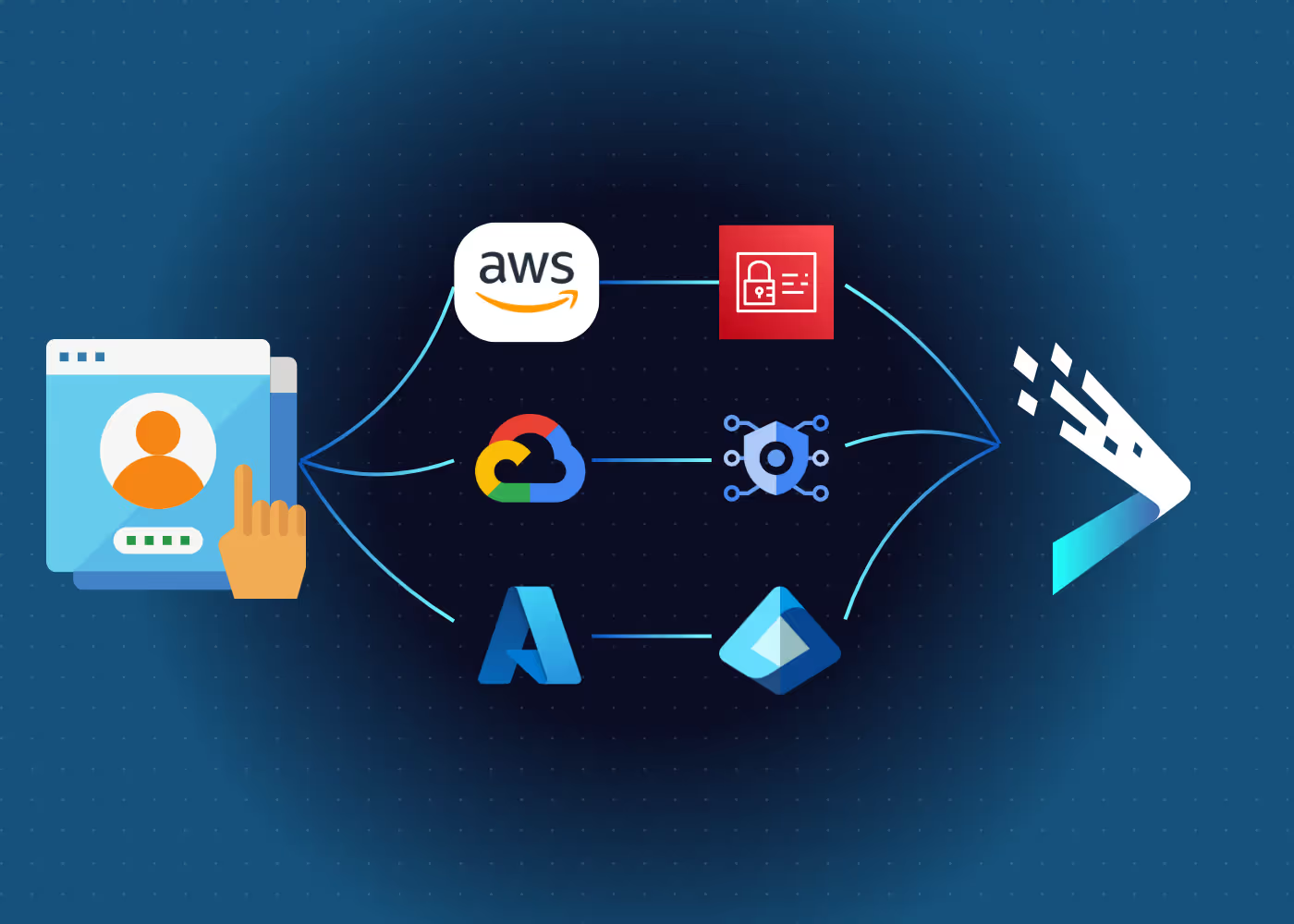
With DataBahn’s Orchestration capabilities, SOCs and Security Teams can collect data from a wide range of sources (both Google and non-Google sources), parse and structure them into the native Google UDM format, enrich them and, orchestrate it to extract meaningful security-relevant data and insights
Get started with SecOps and DataBahn
Enterprise security teams prefer Google SecOps for its powerful analytics and AI capabilities, and its GCP-linked scalability and data processing speeds. With DataBahn, SOCs can seamlessly collect data from third-party sources and even custom applications without needing to parse, normalize, or transform incoming data - all while reducing log ingestion by ~50%
Plug-and-Play connectors to add non-GCP sources

Lower log volumes and SecOps license costs

Reduction in manual effort in data parsing & transformation


Supercharge your SecOps SIEM

Evaluating SecOps
Compare SecOps head-to-head against your existing SIEM to measure its effectiveness for you



Migrating to SecOps
Accelerate your migration to Google SecOps and reduce your time-to-value from months to 14 days

3rd Party Sources
Effortlessly connect your third-party data sources to SecOps with no coding or data wrangling effort
Volume Reduction
Reduce cost and optimize SecOps effectiveness with seamless and intelligent log reduction

Data Formats
Parse, Normalize, and Transform data from popular and custom applications with ease for seamless data flow

Data Governance
Track, manage, and have visibility of data across sources for enhanced enrichment and correlation


Your starting point for all things Databahn
.png)

.png)
.png)
.png)
.png)

.avif)
.avif)
.avif)
.avif)
.avif)
.avif)
.avif)
.avif)
.avif)
.avif)
.avif)
.avif)
.avif)
.avif)
.avif)
.avif)
.avif)
.avif)
.avif)
.avif)
.avif)
.avif)
.avif)
.avif)
%20(5).avif)
.avif)
%20(3).avif)
.avif)

.avif)




Have Questions?
Here's what we hear often
What problem does Databahn solve for teams using Google SecOps?

Google SecOps is built to analyze massive volumes of security telemetry, but SOC teams still struggle upstream with inconsistent log formats, noisy data, and complex onboarding across cloud, on-prem, and SaaS environments. Telemetry ingestion and managing applications and sources not a part of the Google Cloud ecosystem comes with infrastructure challenges and coding requirements.
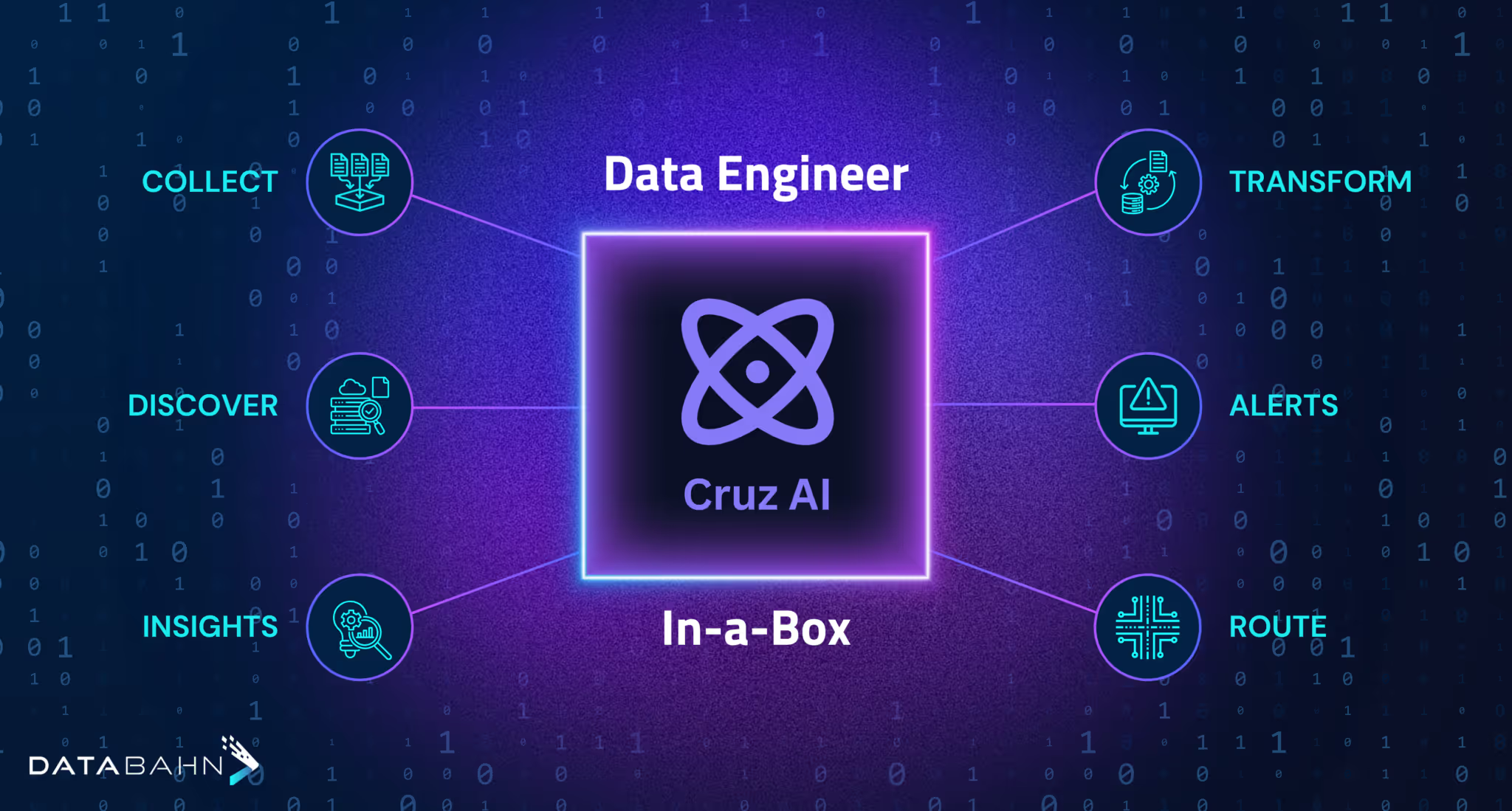
Databahn solves this by acting as the data control layer before SecOps – collecting telemetry from hundreds of sources, parsing and normalizing it into consistent schemas, filtering noise, and enriching events with context so that Google SecOps receives clean, high-fidelity data optimized for detection and investigation.
How does Databahn integrate with Google SecOps?
Databahn is a Google technology partner, with native integration into Google SecOps ingestion pipelines. It supports cloud, hybrid, and on-prem environments using agent-based or agentless collection, and delivers telemetry aligned to SecOps’ expected schemas and formats.
Instead of pushing raw logs directly into the SIEM, Databahn processes data in motion — applying normalization, deduplication, enrichment, and routing — so SecOps can focus on analytics and detection rather than data preparation.
How does Databahn simplify onboarding non-Google log sources into Google SecOps?
Google SecOps relies on a schema-on-write model, which means data must be transformed into Google’s Unified Data Model (UDM) before it becomes searchable or usable for detections. For Google-native services, this is usually handled out of the box. But for non-Google sources – especially firewalls, EDRs, identity providers, SaaS applications, or custom apps – security teams need to build custom pipelines and parsers to reliably ingest logs and map them correctly to UDM.
This creates friction when:
- A log source doesn’t have a prebuilt parser
- Log formats change over time
- New fields or event types are introduced
Without proper UDM mapping, data can become partially indexed, inconsistently searchable, or in some cases silently dropped. Databahn bridges this gap, effortlessly mapping sources from an existing library of integrations and leveraging AI to map custom logs and microservices to UDM in minutes. Databahn also ensures lossless data collection from all sources, tracks and resolves schema drift automatically, and gives complete visibility and control into data ingestion from Google and non-Google sources alike.
How does this integration improve detection quality and reduce noise?
SIEM detections are only as good as the data they receive. By delivering structured, enriched, and de-noised data, Databahn improves how Google SecOps detections and searches perform. Databahn improves detection quality by adding context such as asset metadata, identity attributes, and environment tags.
This reduces false positives, improves correlation accuracy, and helps Google SecOps’ detection logic and analytics surface meaningful threats instead of overwhelming analysts with raw alerts. Analysts and threat detection teams can focus on investigation and response instead of dealing with ingestion complexity inside Google SecOps.
How does this help SOC teams onboard data faster into Google SecOps?
Onboarding new data sources into a SIEM is often slow due to custom parsers, schema mismatches, and brittle pipelines. Databahn accelerates onboarding with 550+ pre-built integrations and AI-assisted parsing for custom or proprietary log formats. SOC teams can add new sources or environments without rewriting ingestion logic for SecOps, significantly reducing time-to-value and operational friction.
Does Databahn help with migrating to Google SecOps?
Yes. DataBahn is designed to simplify and de-risk migrations to Google SecOps, especially for organizations moving from legacy SIEMs and onboarding large volumes of non-Google log sources.
A key challenge when migrating to Google SecOps is that non-Google telemetry must be normalized into Google’s Unified Data Model (UDM) before it becomes usable for search, detections, and YARA-L rules. During migration, this often forces teams to rebuild ingestion pipelines, write custom parsers, and manage parallel data flows – adding risk and operational overhead.
Databahn addresses this by decoupling data collection, normalization, and routing from the SIEM itself:
- Source-first migration: Databahn connects to existing security, infrastructure, SaaS, and custom application sources and automatically transforms their logs into UDM-aligned formats, eliminating the need to manually build or maintain custom parsers for Google SecOps.
- Parallel routing during transition: Data can be routed simultaneously to the incumbent SIEM and Google SecOps, allowing SOC teams to validate detections, queries, and coverage in SecOps without disrupting existing monitoring.
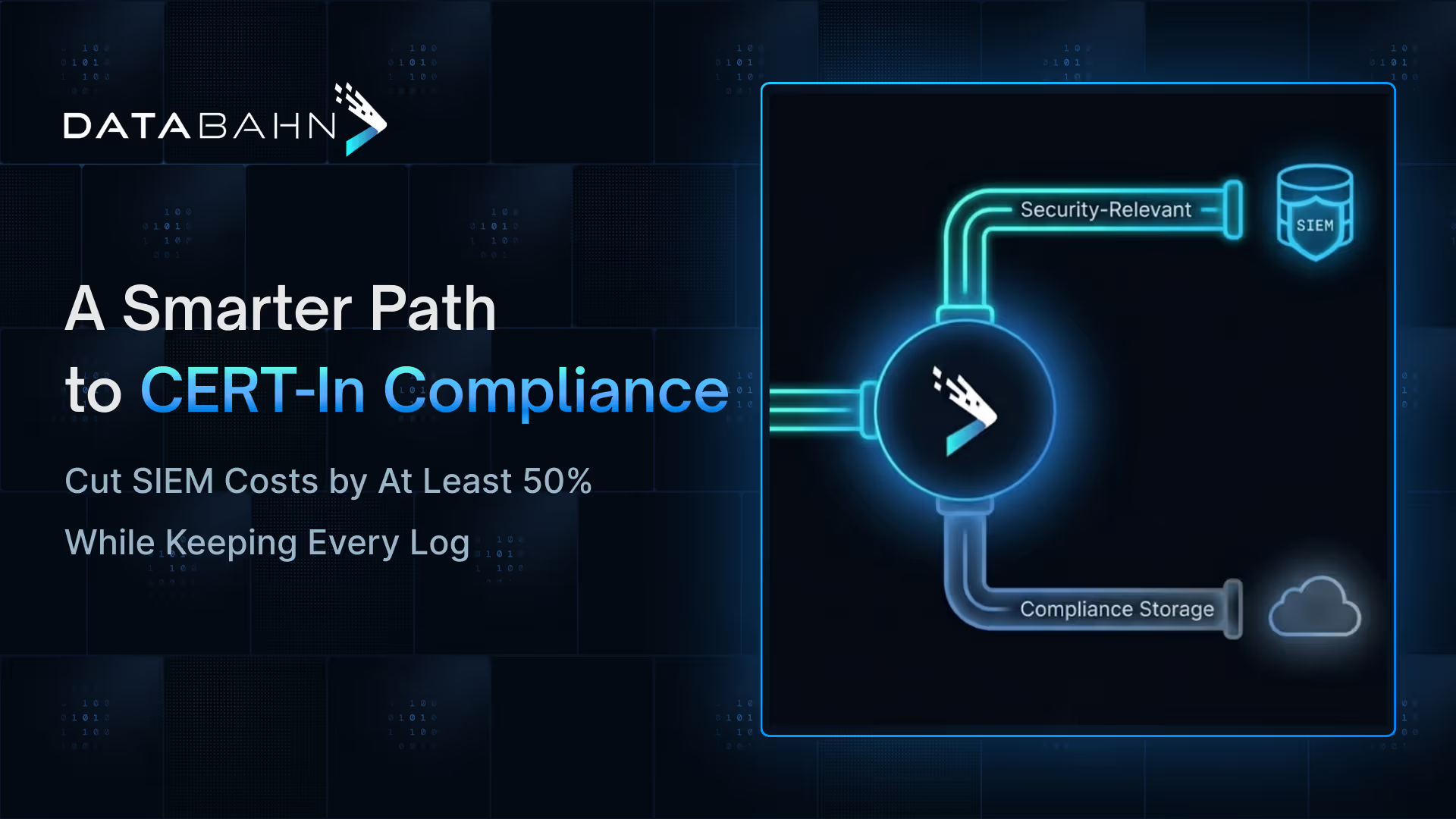
- Data relevance and tiering: Migration becomes an opportunity to reassess which data is truly security-relevant. Databahn enables teams to send high-value telemetry to Google SecOps while routing lower-priority or compliance data to cloud storage, optimizing cost and performance from day one.
- Threat-driven onboarding: By mapping telemetry to threat use cases (for example, via MITRE-aligned coverage analysis), teams can prioritize the right sources during migration instead of lifting and shifting everything blindly.
- Historical and future-ready data: Databahn automates transformation across formats and vendor-native models, helping organizations retain ownership of their security data and avoid lock-in as they move to Google SecOps.
In practice, this means SOCs can migrate to Google SecOps incrementally and safely, without rebuilding ingestion logic for every non-Google source, without data loss during cutover, and with a cleaner, more cost-effective SecOps environment at go-live.
The result is a faster, lower-risk migration to Google SecOps — with normalized, security-ready data feeding UDM from day one, and an architecture that remains flexible long after the migration is complete.
How does Databahn help manage SIEM ingestion costs and scale?
Google SecOps is designed for scale, but uncontrolled ingestion can still drive unnecessary data volume and operational complexity. Databahn enables intelligent filtering, deduplication, and routing before data reaches the SIEM.
This ensures that high-value security signals are prioritized for analysis, while low-value or redundant events are handled appropriately — helping teams control costs without sacrificing visibility.
How does this integration support SIEM migrations or multi-SIEM strategies?
Databahn decouples data collection and normalization from the SIEM itself. This allows organizations to feed Google SecOps without being locked into source-specific ingestion pipelines.
For teams migrating from another SIEM or operating multiple SIEMs, Databahn provides a stable ingestion layer that can route the same normalized telemetry to multiple destinations, reducing migration risk and long-term lock-in.
What visibility does this provide for security leaders and SOC managers?
Security leaders gain end-to-end visibility into what data is being collected, how it’s transformed, and what ultimately reaches Google SecOps. Instead of treating SIEM ingestion as a black box, teams can track pipeline health, coverage gaps, and data quality issues upstream.
This improves trust in detection, simplifies governance, and supports better operational decision-making.
How does this integration make the SOC future-ready?
As security data volumes grow and detection becomes more AI-driven, SOCs need pipelines that can adapt without constant re-engineering. Databahn’s flexible, AI-assisted data pipelines combined with Google SecOps’ scalable analytics create a foundation that can absorb new data sources, evolving threat models, and advanced detection techniques over time.


.avif)

.avif)


